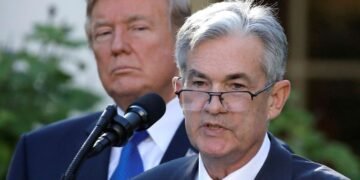























Financial Markets React as Tension Grows Between Trump and Fed Chair Powell
Financial markets are on edge as tensions escalate between U.S. Federal Reserve Chair Jerome Powell and the Trump administration. The White House has reportedly threatened to indict Powell over comments made regarding renovation costs at Federal Reserve buildings in Washington, D.C., further complicating an already fraught relationship centered on interest rate policies.
Why It Matters
The conflict highlights ongoing concerns about the independence of the Federal Reserve and its ability to operate without political interference. The implications of this standoff extend beyond monetary policy, influencing market stability and investor confidence amid economic uncertainty.
Key Developments
- The Trump administration’s threat against Powell stems from remarks he made about a $2.5 billion renovation project, which the President criticized as overindulgent.
- Powell characterized the legal threats as an attempt to exert greater control over U.S. monetary policy, stating that the Federal Reserve prioritizes public service over political pressure.
- The U.S. dollar weakened against other currencies, and futures indicate that stock markets will likely open lower, reflecting investor anxiety.
- Powell served a subpoena related to his June testimony before a Senate committee, addressing the renovation costs that had come under scrutiny.
- A Republican senator cautioned that any Department of Justice (DoJ) investigation into Powell would stall the nomination process for a new Fed chair.
Full Report
Tensions Between Powell and Trump
Jerome Powell has found himself at odds with President Trump over economic strategies, specifically the pace and scale of interest rate cuts. According to Powell, the threat of criminal charges is a direct result of not aligning Fed actions with the President’s preferences. He expressed concerns that monetary policy decisions should be grounded in economic conditions and evidence, rather than influenced by political intimidation.
Powell, who has held his position through multiple administrations, underscored the importance of standing firm in the face of threats during public service. This declaration further emphasizes the delicate balance between the Federal Reserve’s independence and the political landscape in Washington.
Market Reactions
As the ramifications of the administration’s threats unfolded, the financial markets reacted swiftly. Analysts noted a notable decline in the dollar’s value, as well as a spike in gold prices, often seen as a safe haven during periods of instability. Futures trading suggested a roughly 1% drop in the tech-heavy Nasdaq at the market’s opening, highlighting investor jitters amid the ongoing conflict.
Legal and Nomination Implications
The tensions come at a critical juncture, with Powell expected to step down at the end of his term in May. The White House’s stance complicates the search for a successor, as any investigation by the DoJ is anticipated to delay the nomination process.
Context & Previous Events
This situation is not the first indication of friction between the Trump administration and the Federal Reserve. The President has consistently advocated for lower interest rates to stimulate the economy, an effort that has faced skepticism from Powell and other Fed officials. The current dispute coincides with pending arguments before the Supreme Court regarding Trump’s attempt to dismiss another Fed official, underscoring a broader pattern of conflict over Federal Reserve governance.






