






















Sudan’s Government Returns to Khartoum Amid Efforts to Restore Services
Sudan’s military-led government has made a significant comeback, returning to the capital of Khartoum after nearly three years operating from Port Sudan, which served as a base during the civil conflict. Prime Minister Kamil Idris announced on Sunday that the administration aims to revitalize essential services for residents severely impacted by the ongoing war.
Why It Matters
This development marks a pivotal moment for Sudan as the government attempts to regain control and address critical humanitarian needs in a city devastated by conflict. The return to Khartoum could signal a gradual stabilization, although the challenges remain immense, with millions displaced and vast areas in ruins.
Key Developments
- Prime Minister Kamil Idris declared the “government of hope” back in Khartoum, emphasizing a commitment to improve crucial services.
- The military regained control of the capital from the Rapid Support Forces (RSF) following a significant military engagement last March.
- Idris highlighted plans to enhance electricity, water, healthcare, and education for Khartoum’s residents.
- He announced 2026 as a potential “year of peace” for Sudan, where an estimated 150,000 lives have been lost due to the conflict.
Full Report
Government’s Return
The military-led government returned to Khartoum after being ousted by paramilitary forces during the civil war that erupted in 2023. This transition reflects a strategic recovery as the Sudanese armed forces assert their control over the capital, aiming to stabilize governance and public services.
Service Restoration Plans
Prime Minister Idris, during a press briefing, expressed a strong commitment to revamping essential services. He confirmed that improvements in electricity, water supply, healthcare, and education are top priorities for the government as it seeks to provide support to the beleaguered residents of Khartoum.
Humanitarian Crisis
The situation in Sudan is dire, with the United Nations labeling it the world’s worst humanitarian crisis. Approximately 12 million people have been displaced, with many suffering under the violent RSF occupation characterized by mass looting and the seizure of civilian homes. Basic services in the region remain operational but are described as “barely functioning,” according to recent reports.
Military Conflict Background
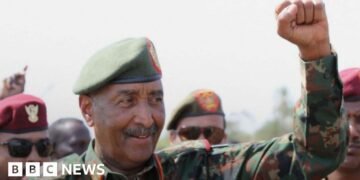
The ongoing conflict began when General Abdel Fattah-al Burhan, head of the army, and his deputy, General Mohamed Hamdan Dagalo, leader of the RSF, engaged in a fierce power struggle. Throughout the conflict, both factions have faced accusations of committing atrocities, complicating international efforts to achieve peace amidst a highly volatile environment.
Context & Previous Events
In early 2023, the civil war erupted, leading to a widespread humanitarian disaster with around five million people fleeing Khartoum. The military regained control of the capital in a critical breakthrough last March. With both the RSF and the Sudanese military receiving external support, efforts for mediation from foreign nations have largely failed, leaving the situation precarious.