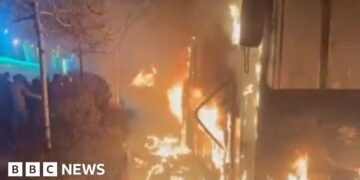























Iran: Protests Escalate Amid Deadly Government Crackdown
Protests across Iran have intensified despite a violent government response, with reports of hundreds killed or injured in recent days. The demonstrations, which have spread to over 100 cities, represent a significant challenge to the authority of the Iranian regime amid rising inflation and widespread discontent.
Why It Matters
These protests highlight the ongoing struggle against the clerical leadership in Iran, particularly calling for the resignation of Supreme Leader Ayatollah Ali Khamenei. The harsh government crackdown and severe internet restrictions reflect a desperate attempt by the authorities to maintain control while public anger simmers over economic hardship and human rights abuses.
Key Developments
-
Violent Clashes: Protests erupted over the weekend, resulting in violent encounters between demonstrators and security forces. Eyewitness accounts describe scenes of chaos in cities like Tehran and Mashhad.
-
Official Response: Iranian authorities are treating demonstrators as "enemies of God," a designation that could lead to severe penalties, including the death penalty. The government has imposed a near-total internet blackout to hinder communication and organization among protesters.
-
International Reaction: U.S. officials have expressed support for the protesters, with President Donald Trump announcing readiness to assist them. Senator Lindsey Graham has publicly voiced encouragement, signaling U.S. backing amid escalating tensions.
-
Exiled Voices: Reza Pahlavi, son of the last Shah of Iran, called for international solidarity and promised to return to Iran, claiming a weakened regime facing internal dissent.
- Human Rights Concerns: Reports of grave human rights violations are surfacing, with Amnesty International highlighting the unlawful use of lethal force by security personnel. Medical facilities are overwhelmed with casualties due to the violence.
Full Report
Protest Dynamics
Protests continue to unfold across Iran, with demonstrators rallying against the clerical regime’s authority amid a backdrop of skyrocketing inflation. In major cities like Tehran, protesters have called for the resignation of Ayatollah Khamenei. Despite the government’s violent response, which has reportedly led to hundreds of casualties—a mix of protesters and security personnel—people remain undeterred, taking to the streets to voice their discontent.
Government Crackdown
The Iranian government has intensified its clampdown on information, enforcing an overarching internet blackout. Over the past few years, internet access has been increasingly restricted, but the current situation marks a significant escalation, with the domestic intranet also severely limited. Alireza Manafi, an internet researcher, noted that access is now nearly nonexistent, leaving many without means to communicate effectively with the outside world.
Eyewitness Accounts and Verification
Verified footage shows alarming scenes of conflict between protesters and security forces. In one clip from Tehran’s Gisha district, masked participants are seen interacting with security units in a tense standoff. Clashes in Mashhad were depicted with protesters taking cover and sounds of gunfire ringing out, further underscoring the escalating violence.
Responses from the Exiled Community
As protests rage on, Reza Pahlavi, the exiled former heir to Iran’s monarchy, has encouraged demonstrators to persist in their efforts. His calls for solidarity and potential return come amid assertions that many security forces are defying orders to suppress the protests, indicating possible fractures within the regime’s enforcement apparatus.
Health Sector Overwhelmed
Reports indicate that hospitals across Iran are struggling to manage the influx of injured individuals. Eyewitness statements describe graphic scenes of young people, many under 25, arriving at facilities with severe injuries from direct gunfire. Alarmingly, medical workers report insufficient resources to handle the surge in casualties, highlighting the humanitarian crisis exacerbated by the ongoing violence.
Context & Previous Events
This wave of protests marks the most widespread unrest since the 2022 uprising, ignited by the death of Mahsa Amini following her detention by morality police. That incident led to the death of over 550 individuals and the detention of around 20,000 people as a result of authorities’ attempts to suppress dissent.
As Iran faces challenges from within, the international community watches closely, with potential implications for diplomatic and military relations moving forward.