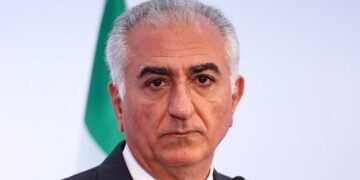























Reza Pahlavi Emerges as Symbol of Opposition Amid Iran’s Protests
As anti-government protests sweep across Iran, Crown Prince Reza Pahlavi is positioning himself as a pivotal figure for the country’s future. The exiled prince, now 65, has rallied demonstrators, transforming initial grievances over economic turmoil into a substantial challenge to the ruling theocracy.
Why It Matters
Pahlavi’s re-emergence comes at a time when Iran’s leaders are facing one of their most significant challenges since the 1979 Islamic Revolution. The protests highlight deep-seated discontent with the current regime, and Pahlavi’s involvement raises questions about a potential shift in the political landscape, including the possibility of reinstating a monarchy.
Key Developments
- Protests Growth: Protests have escalated, driven by discontent over economic hardships and government repression.
- Pahlavi’s Participation: Pahlavi has actively engaged with protesters, emphasizing a vision for a future Iran, which he sees as a constitutional monarchy.
- Historical Context: Pahlavi ascended to the role of shah on his 20th birthday, following the exile of his father, Shah Mohammad Reza Pahlavi, during the Islamic Revolution.
- Mixed Reception: While some protesters have expressed support for Pahlavi, many are wary given the historical implications of a return to monarchical rule.
Full Report
Who is Reza Pahlavi?
Born on October 31, 1960, Reza Pahlavi grew up as the privileged heir to the Shah of Iran, Mohammad Reza Pahlavi. His father’s reign was characterized by significant economic growth, yet it faced extensive criticism for inequality and repression, especially through the feared SAVAK intelligence agency. The shah’s rule ultimately faltered amid widespread protests and his own declining health during the late 1970s.
Leaving Iran for the U.S. in 1978 to attend flight school, Pahlavi’s family fled the country a year later as the Islamic Revolution gained momentum. After his father’s death, Pahlavi was declared the new shah in exile, though he has remained out of Iran for nearly 50 years.
Attempts to Gain Influence
Over the decades, Pahlavi has sought to maintain influence from afar, predominantly in the U.S., where he has lived in cities like Los Angeles and Washington, D.C. Notably, in 1986, the CIA reportedly aided his allies in broadcasting a message to Iran, where he vowed to return and promote freedom.
His recent communications via social media and Farsi-language news outlets have focused on rallying support for increased protests and reform. However, many younger Iranians, born well after the end of the last shah’s rule, express disinterest or concern over his royal lineage.
Vision for Iran’s Future
In recent statements, Pahlavi has proposed the possibility of transforming Iran into a constitutional monarchy, advocating for an elected leader rather than a hereditary one. Despite aspirations from some exiled monarchists, his appeal among the general populace is mixed. Factors such as the memories of the Pahlavi era, complaints of detachment from contemporary Iran, and criticisms regarding his foreign policy views, especially his support of Israel, complicate his standing.
U.S. political figures have also shown hesitation in endorsing him as a leading opposition figure, suggesting that key support may wait until the outcome of the current unrest is clearer.
Context & Previous Events
The protests in Iran mark one of the most significant challenges to the government since the 1979 Islamic Revolution, which established the current theocratic regime. The increasing public unrest has stemmed from a combination of economic difficulties and growing frustrations with government restrictions on personal freedoms.