






















Iran’s Protests Escalate: Overwhelmed Hospitals and International Warnings
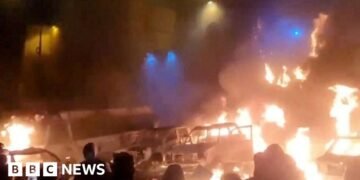
Iran’s ongoing protests have entered their second week, with escalating violence and significant injuries reported amid heightened tensions. As Iranian authorities issue stern warnings to demonstrators, hospitals in major cities are grappling with an overwhelming number of casualties, prompting urgent calls for medical assistance and support from international leaders.
Why It Matters
The situation in Iran reflects a critical moment for both domestic stability and international relations. With at least 50 protesters reportedly killed amidst growing unrest, the government’s harsh response raises concerns over human rights and civil liberties. Furthermore, the international community’s reaction underscores the widening geopolitical implications of the unrest as fears of a violent crackdown grow.
Key Developments
- Hospitals in Tehran and Shiraz are overwhelmed with injuries, particularly from gunshot wounds.
- At least 50 protesters and 15 security personnel have died since the protests began, according to human rights organizations.
- U.S. President Donald Trump issued a stern warning to Iran regarding the handling of protests, emphasizing a strong U.S. response to violence.
- International leaders have expressed support for the right to peaceful assembly and criticized the Iranian government’s actions.
- Iran’s Supreme Leader Ayatollah Ali Khamenei reaffirmed the government’s stance against what he termed as destructive forces.
Full Report
Hospitals in Crisis
Two hospital medics who spoke with the BBC reported that facilities are overwhelmed, with one eye hospital in Tehran officially declaring a crisis. Non-urgent medical services have been suspended as medical staff are called in to manage an influx of emergency cases. A medic from a hospital in Shiraz indicated that many of the injured were arriving with severe gunshot wounds, particularly to the head and eyes. This alarming rise in injuries points to increasingly violent confrontations between protesters and security forces.
International Reactions
President Trump described the situation in Iran as grave, noting that citizens appear to be reclaiming control over cities previously viewed as solidly loyal to the regime. He reiterated that any violence against protesters would prompt a strong U.S. response, but clarified that this would not entail deploying troops. Concurrently, U.S. officials dismissed remarks made by Iranian Foreign Minister Abbas Araghchi, who blamed foreign influences for the unrest, labeling such statements as delusional.
Warnings from Authorities
Iran’s government has intensified its rhetoric against protesters, labeling them as "armed vandals" and suggesting that decisive legal actions would be taken against them. The Supreme National Security Council formally declared no leniency towards demonstrators, and the intelligence branch of Iran’s Islamic Revolutionary Guard Corps promised to continue operations until what they describe as external threats are neutralized.
Global Calls for Restraint
The United Nations and various world leaders have voiced concern about the violence and loss of life in Iran. UN spokesperson Stéphane Dujarric underscored the right to peaceful demonstration, while a joint European statement emphasized the obligation of Iranian authorities to protect their citizens and uphold freedoms of expression and assembly.
Context & Previous Events
Since protests began on December 28, Iran has experienced widespread unrest with more than 2,311 individuals reportedly arrested. Human rights organizations have documented increasing casualties, with reports from various sources confirming fatalities among both protesters and security forces. Iran’s government has faced significant criticism for its handling of the unrest, exacerbated by ongoing internet blackouts that limit information dissemination and verification.