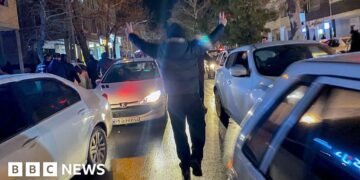























Tehran Erupts in Unprecedented Anti-Government Protests Amid Government Restraint
Tehran is witnessing the largest anti-government demonstrations in decades, as protests sweep across numerous districts in the capital and its surrounding metropolitan area of nearly 16 million. The situation highlights significant unrest in Iran as security forces adopt a cautious approach in some areas, yet the overall violence against protesters remains alarming.
Why It Matters
The unfolding protests signal deep-rooted dissatisfaction with the Iranian government, amid concerns over potential foreign intervention and external pressures. The regime’s response could set the stage for increased volatility in the region, influencing not only domestic stability but also Iran’s diplomatic relations, particularly with the United States.
Key Developments
- Protests have erupted across Tehran, with security forces showing notable restraint in certain districts.
- Reports indicate over 40 deaths linked to the protests, with significant violence reported in smaller provincial cities.
- Iran’s Supreme Leader Ayatollah Khamenei has condemned the demonstrations as foreign-instigated sabotage.
- President Donald Trump has warned of severe repercussions if peaceful protesters are harmed.
- Video evidence has emerged showing security forces firing on demonstrators, further escalating tensions.
Full Report
Unprecedented Restraint and Violence
During a recent night of protests, security forces in Tehran appeared to exercise restraint, refraining from direct confrontations in areas with large crowds. This tactic has sparked speculation about a strategic decision by authorities to avoid further escalation in the capital. However, reports from smaller cities across Iran depict a starkly different picture, with violent crackdowns leading to numerous fatalities.
According to various Iranian human rights organizations, over 40 individuals have died since the protests commenced nearly two weeks ago. BBC Persian has corroborated the identities of at least 21 victims, many originating from Lorestan and the Kurdish-majority regions of Illam and Kermanshah. Eyewitness accounts and video evidence suggest that security forces have explicitly targeted protesters.
Government Response and External Pressures
In response to the ongoing unrest, Ayatollah Khamenei has addressed the nation, framing the protests as a result of foreign interference. He accused protesters of damaging their own property to impress the United States, escalating tensions with Washington amidst a backdrop of recent military actions and geopolitical anxieties involving Iranian leadership.
President Trump’s remarks have also amplified the stakes, as he cautioned Iran against repeating past violent suppressions, indicating a potential U.S. response. He highlighted that Iranian authorities have been explicitly warned about the consequences of escalation against peaceful protests.
Limited Authority of Local Leaders
Despite calls from President Masoud Pezeshkian for tolerance towards what he termed “legitimate protests,” ultimate control of security strategy lies with the Supreme Leader. The current government response appears designed to manage optics—aiming to avert mass bloodshed in Tehran while unleashing harsher measures in rural areas where protesters have faced brutal crackdowns.
Context & Previous Events
The current unrest emerges in the wake of a particularly deadly protest movement in 2022, sparked by the death of Mahsa Amini, a Kurdish woman who died in police custody. That movement left over 500 people dead, and the Islamic Revolutionary Guard Corps (IRGC) played an instrumental role in suppressing those demonstrations. Historically, the Iranian government has utilized a multilayered security apparatus to control protests, often transitioning authority from local police to IRGC commanders when unrest peaks.