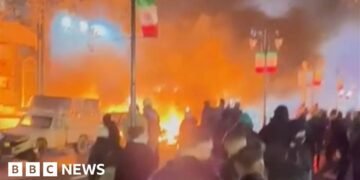























Protests Erupt in Tehran as Currency Crisis Deepens
Fires engulf buildings in Tehran as protests against the Iranian government escalate, with unrest now affecting over 100 cities nationwide. This wave of demonstrations marks the 12th consecutive day of civil discontent, prompting significant concern regarding the nation’s stability.
Why It Matters
The current turmoil in Iran highlights widespread public frustration, particularly related to the rapid decline of the country’s currency. As inflation surges, citizens are voicing their discontent in an unprecedented show of solidarity against the government and its economic policies, which may have far-reaching implications for the regime’s legitimacy.
Key Developments
- Verified footage from BBC Persian shows multiple buildings ablaze in Tehran.
- Protests have erupted in all 31 provinces of Iran, affecting more than 100 cities and towns.
- The unrest has stretched into its 12th day, with calls for change growing louder across the nation.
Full Report
Escalation of Protests
Reports indicate that the demonstrations are fueled primarily by economic dissatisfaction, as citizens grapple with the effects of a collapsing currency. Video evidence, confirmed by BBC Persian, depicts moments of chaos with mosques in the Gholhak and Sa’adat Abad neighborhoods set aflame amid the unrest.
Civil Response
Human rights organizations confirm that demonstrators are expressing outrage in numerous urban areas, signifying a potential turning point in civil engagement against government practices. The protests have drawn significant attention due to their intensity and persistence.
Context & Previous Events
This series of protests stems from mounting economic issues affecting Iranians, particularly the depreciation of the national currency. As grievances continue to boil over, the government faces increasing pressure to address both economic and political concerns raised by its citizens.