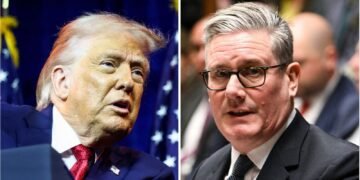























Starmer and Trump Discuss Arctic Security Amid Greenland Controversy
Sir Keir Starmer has emphasized the pressing need to bolster protections for the Arctic region during recent discussions with U.S. President Donald Trump. The talks come amidst heightened tensions related to Russia’s actions in the High North and contrasting statements concerning Greenland, a strategically significant territory in the Arctic.
Why It Matters
The Arctic is increasingly viewed as a critical area for national security amid global geopolitical shifts, particularly with an assertive Russia. Starmer’s conversations with Trump involve not only military considerations but also the broader implications for NATO and Euro-Atlantic alliances. The situation raises questions about Greenland’s status and its future, which many argue should rest with its residents and Denmark.
Key Developments
- Sir Keir Starmer and Donald Trump engaged in discussions regarding Euro-Atlantic security, particularly in light of Russian aggressiveness in the Arctic.
- Starmer reiterated that decisions concerning Greenland should be made by its inhabitants and Denmark, in stark contrast to Trump’s aggressive rhetoric suggesting potential military action.
- The leaders’ dialogues included discussions around deterring Russian threats in the High North and enhancing the protection of the region.
- Starmer has been meeting with various European leaders, including NATO Chief Mark Rutte and the Danish Prime Minister, to discuss coordinated responses to potential threats to Greenland.
Full Report
Diplomatic Discussions
In a series of calls, the leaders touched upon the importance of the Arctic region and the necessity of reinforcing security measures in light of Russian activities. Downing Street described the initial call as "positive" and "friendly," suggesting a collaborative spirit. Starmer emphasized that Europe must undertake more substantial steps to secure Euro-Atlantic interests.
While Trump has been vocal about the U.S. needing Greenland for national security purposes, stating its importance for military strategy, Starmer made it clear that any future decisions regarding Greenland’s fate must come from its local populace and the Danish government. The contrasting positions illustrate the complexities underlying U.S. foreign policy in the region.
NATO and Regional Defense
Starmer has gained significant attention for his diplomatic outreach, having also contacted NATO Chief Mark Rutte to address the increasing threats posed by Russia. According to statements from Downing Street, both leaders concurred on the need for enhanced measures to safeguard the Arctic region. Discussions included Ukraine and reaffirming British support of Denmark’s territorial integrity concerning Greenland.
Reactions to U.S. Actions
In light of recent U.S. military maneuvers, including the capture of Venezuelan leader Nicolà Maduro, Starmer faced criticism from opposition leaders in the UK for his handling of U.S.-UK relations concerning Greenland. Concerns have arisen over possible U.S. military involvement in Greenland and the implications for the NATO alliance. In response, Starmer has been urged to clarify the United Kingdom’s position on allowing U.S. bases to support such an operation.
Danish and Greenland Talks
The diplomatic fabric of the discussions has also included Danish and Greenland representatives in Washington, pointing to the urgency of addressing U.S. intentions towards Greenland. Meetings with White House officials have aimed at understanding U.S. policy on the territory and urging a measured approach rather than an aggressive one.
Context & Previous Events
Previously, Sir Keir Starmer has contended that Greenland’s future should rest entirely with its people and the Danish government, a position that stands in sharp contrast to Trump’s assertive rhetoric about military acquisition. The increased focus on Greenland follows Trump’s repeated claims about its strategic importance, with U.S. officials discussing both military and diplomatic avenues for securing its governance. Starmer’s outreach and recent dialogues may play a crucial role in shaping the reaction of European allies to these developments.