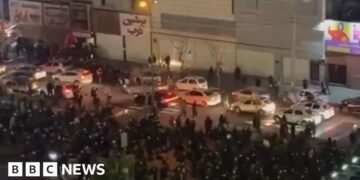























Massive Protests Erupt Across Iran, Challenging Clerical Authority
Protests are surging in Iran, with large crowds gathering in Tehran and other cities, marking the most significant demonstration against the clerical regime in several years. Demonstrators are voicing their discontent with the government amid ongoing economic turmoil, emboldened by calls for regime change and the return of the country’s former monarch.
Why It Matters
The current unrest, which follows over a week of escalating protests, reflects deep-seated frustrations over Iran’s faltering economy and governmental repression. As demonstrations spread across 140 cities and towns, the movement signals a critical moment for opposition forces, who are increasingly unified against the clerical establishment. The situation poses significant challenges for the Iranian regime, which faces both internal dissent and mounting economic pressure.
Key Developments
- Protests have been confirmed in major cities, including Tehran and Mashhad.
- The unrest marks the largest turnout against the Iranian government since 2009.
- At least 34 protesters and seven security personnel have reportedly died in clashes, with further casualties noted by various human rights organizations.
- More than 2,270 protesters have been arrested during the ongoing demonstrations.
- Calls for the resignation of Supreme Leader Ayatollah Ali Khamenei have intensified, alongside demands for the return of Reza Pahlavi, the exiled son of the late Shah.
- The protests were initially sparked by a drastic decline in the value of the Iranian currency, exacerbating economic frustrations.
Full Report
Widespread Demonstrations
In footage verified by BBC Persian, vast crowds have been shown marching peacefully through urban centers, with demonstrators openly challenging the clerical regime. The protests are being described as the most substantial opposition since the mass protests following the disputed 2009 presidential election. Observers note that security forces have, so far, refrained from dispersing peaceful gatherings, although violent altercations have marred some locations.
Death Toll and Arrests
The Human Rights Activist News Agency (HRANA) reports that at least 34 protesters and seven members of the security forces have lost their lives during the unrest. Other sources, such as the Norway-based Iran Human Rights, indicate the death toll may be even higher, with at least 45 protesters confirmed dead, including eight minors. Iranian authorities have acknowledged the deaths of five security personnel amidst ongoing violence.
Initial Causes of Unrest
The protests began on December 28, triggered by frustrations over the plummeting value of the Iranian rial, which has reached record lows against the US dollar. This economic decline, compounded by staggering inflation rates approaching 40%, has fueled public anger. Mismanagement and international sanctions due to Iran’s nuclear program have further exacerbated the country’s economic woes, leading to growing discontent among citizens.
Context & Previous Events
The recent protests signify a continuation of widespread dissatisfaction with the Iranian regime, echoing the sentiments expressed during the 2009 protests against electoral fraud. Since the protests began, they have expanded to include diverse groups, notably university students, who have joined the outcry against the clerical leadership and its policies.