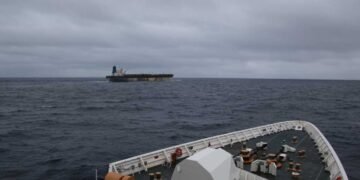























U.S. Forces Seize Russian-Flagged Oil Tanker in North Atlantic
U.S. military forces successfully seized a Russian-flagged oil tanker, previously named the Bella 1, after a two-week pursuit in the North Atlantic, underscoring ongoing efforts to enforce sanctions against Venezuela. The vessel, which had altered its course and changed names to evade U.S. authorities, was intercepted between Iceland and Britain amid rising tensions around maritime operations involving sanctioned nations.
Why It Matters
This operation highlights the U.S. commitment to enforcing sanctions against nations like Venezuela, Russia, and Iran, which are accused of facilitating oil trade that circumvents international laws. The seizure demonstrates the U.S. military’s proactive approach to curtail illicit activities at sea, aiming to deter other entities from engaging in similar behaviors that threaten global stability.
Key Developments
- U.S. forces seized the tanker after it attempted to avoid detection by changing its name and flag.
- The Russian Ministry of Transport claimed the vessel was properly registered and asserted that no state is entitled to use force against registered ships.
- White House Press Secretary Karoline Leavitt confirmed that the Bella 1 was linked to illicit oil transportation activities.
- The U.S. military announced that the ship’s crew could face prosecution under federal law, with plans to bring them to the United States if necessary.
- A second tanker, the Sophia, was intercepted in the Caribbean, adding to the U.S. efforts against so-called "ghost fleet" operations.
Full Report
Seizure of the Bella 1
U.S. forces seized the vessel, then known as the Marinera, after a protracted chase that involved the tanker altering course to evade U.S. detection. Originally set to sail for Venezuela, the Bella 1 was en route when it was identified on the U.S. sanctions list for contributing to the trade of sanctioned oil. The U.S. European Command reported that communication with the vessel ceased after it was boarded.
Reaction from Russia
Following the seizure, the Russian Ministry of Transport defended the tanker, stating that it had received temporary permission to operate under the Russian flag. The ministry invoked international law to suggest that the U.S. had no right to board the ship, although it did not directly counter the allegations of sanctions evasion. The ministry indicated that the vessel had turned off its transponders, trying to escape the pursuit.
Additional Interception
In a related action, the U.S. Southern Command announced the interception of another tanker, the Sophia, categorized as a "stateless, sanctioned dark fleet motor tanker." Officials noted that both vessels, the Bella 1 and Sophia, were either docked in Venezuela or on their way to it when they were seized.
Statements from Officials
U.K. Defence Secretary John Healey described the Bella 1 as part of a broader network of vessels used to evade sanctions, contributing to regional instability and "fueling terrorism, conflict, and misery." In the U.S., Secretary of Homeland Security Kristi Noem highlighted the coordinated efforts of the Coast Guard, stating that the operations were meticulously planned.
Context & Previous Events
The U.S. military’s campaign to seize tankers involved in sanction evasion began approximately a month ago. The Bella 1 was among a "ghost fleet" of vessels implicated in transporting oil from countries facing U.S. sanctions, including Venezuela and Iran. Tensions have been rising significantly over maritime activities linked to these nations, prompting increased vigilance from U.S. forces.
This is a developing story.