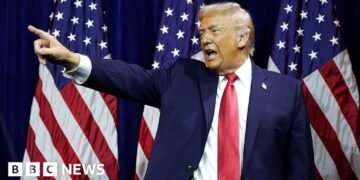























In a significant policy shift, President Donald Trump has announced the withdrawal of the United States from numerous international organizations, including several vital to combating climate change. This move affects 66 groups, nearly half of which are affiliated with the United Nations, raising concerns about the future of global climate initiatives.
This decision underscores a growing trend within the administration to prioritize perceived American interests over international cooperation. Critics argue that these withdrawals could undermine global efforts to address pressing issues like climate change and public health.
Key Developments
- The White House stated that the withdrawals were necessary as the organizations no longer served American interests and promoted agendas contrary to U.S. priorities.
- Notable entities affected include the UN Framework Convention on Climate Change and the Intergovernmental Panel on Climate Change (IPCC).
- The move is said to save taxpayer dollars, with the administration labeling many of the organizations as promoting “radical climate policies.”
- Reactions have been critical, with advocates characterizing the administration’s actions as detrimental to science and global collaboration.
Full Report
Details of the Withdrawal
The recent memorandum signed by President Trump follows a review conducted by the White House. It claims that many of the targeted organizations are ineffective, with an agenda labeled as hostile to U.S. sovereignty and economic strength. The statement highlighted an intention to end American taxpayer funding for these organizations that the administration believes prioritize globalist goals over national interests.
Reactions from Advocacy Groups
Rachel Cleetus, a senior policy director with the Union of Concerned Scientists, described the withdrawal as a “new low.” She voiced concerns that the administration’s stance poses risks to public well-being and is indicative of an authoritarian approach that undermines scientific consensus.
Historical Precedents
Earlier in his term, President Trump withdrew the U.S. from the Paris Agreement, which is widely considered the cornerstone of global efforts to combat climate change. Additionally, he opted not to send a delegation to the COP30 climate summit in Brazil last year, further signaling a retreat from international climate commitments.
Context & Previous Events
According to the U.S. Constitution, the president can enter treaties with a two-thirds Senate agreement but remains silent on withdrawal processes, suggesting potential legal challenges ahead. This latest decision aligns with a broader pattern of the administration’s skepticism toward international agreements and its rejection of the scientific community’s views on climate change.