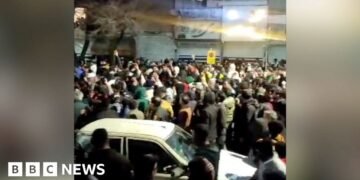























Violent Clashes Erupt Amid Ongoing Protests Across Iran
Protests fueled by economic despair continue to erupt across Iran, entering their 11th day as demonstrators clash violently with security forces. The unrest, characterized by intense confrontations and a growing death toll, highlights deep-seated discontent among the Iranian populace as they fight against what they perceive to be oppressive governance.
Why It Matters
The significance of these protests transcends immediate economic grievances, revealing widespread frustration over systemic issues like government mismanagement, corruption, and heavy sanctions. With escalating violence, the situation poses critical implications not only for Iranian society but also for international relations, especially in light of threats of U.S. intervention should security forces target peaceful demonstrators.
Key Developments
- Violent clashes reported in multiple cities, including Lordegan and Mashhad, resulting in at least 34 protesters and four security personnel dead.
- Social media footage reveals protesters throwing stones, while security forces reportedly deploy gunfire and tear gas to disperse crowds.
- The protests have spread to 111 cities across all 31 provinces, showing significant nationwide unrest.
- Iranian officials confirmed that two policemen were killed by armed individuals in Lordegan, where unrest has been particularly intense.
- Vice-President Mohammad Jafar Qaempanah stated that security measures should not target peaceful protesters while emphasizing the need to differentiate protesters from those committing violence.
- Authorities have initiated a monthly allowance program aimed at easing financial burdens on citizens amid rampant inflation.
Full Report
Scenes of Clashes and Calls for Change
On Wednesday, fresh protests erupted in various Iranian cities, including Qazvin and the holy city of Mashhad, where protesters clashed with security forces. In these confrontations, demonstrators were heard shouting slogans denying the legitimacy of the regime, such as "Death to the dictator," directed at Supreme Leader Ayatollah Ali Khamenei. Footage confirmed by BBC Persian showcased the intensity of the situation as security forces resorted to tear gas and live ammunition against crowds.
The protests, ignited by the falling value of the Iranian currency, the rial, have drawn in diverse segments of society, including university students. Amplified by social media, the movement has garnered support for the exiled former heir to the throne, Reza Pahlavi. Video reports highlighted scenes of unrest where protesters demanded the departure of the clerical government, shouting, “Mullahs must get lost!”
Government Response and Public Sentiment
Following a cabinet meeting, officials emphasized that peaceful demonstrators would not be subjected to security measures, though those who resort to violence would face swift prosecution. In a severe crackdown reminiscent of previous uprisings, judiciary officials threatened rapid legal action against "rioters." Supreme Leader Khamenei has highlighted the importance of dialogue with protesters while underscoring a firm stance against perceived rioters.
The engagement of public figures like Dr. Sanam Vakil from Chatham House reflects the breadth of public frustration. She notes the dire circumstances faced by citizens amid soaring inflation and limited future prospects, stating that if public participation continues to grow, the movement could become increasingly significant.
Context & Previous Events
This wave of protests is the most extensive since the widespread unrest that followed the death of Mahsa Amini in police custody in 2022. That earlier uprising saw significant losses, with reports indicating over 550 fatalities and 20,000 detentions amid a violent crackdown by security forces. The current demonstrations echo similar calls for change, demonstrating the persistent dissatisfaction with Iran’s political and economic landscape.