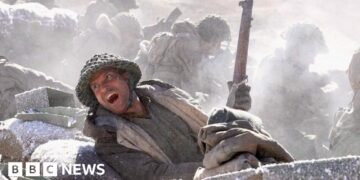























In a bid to revive the memories of a pivotal yet overlooked battle from the 1962 India-China War, Bollywood’s latest film “120 Bahadur” features actor Farhan Akhtar portraying Major Shaitan Singh. Although the film has not performed well at the box office, it successfully brings to light the valiant efforts of Indian soldiers who defended the Rezang La pass in the treacherous Himalayan terrain.
This cinematic endeavor aims to honor the bravery and sacrifice of a group of soldiers who, against overwhelming odds, engaged in a protracted struggle that has come to symbolize courage in the face of adversity. Major Singh and his men faced a well-equipped Chinese army, making their stand a significant yet tragic chapter in India’s military history.
Key Developments
- “120 Bahadur” tells the story of Major Shaitan Singh and the courageous stand taken by soldiers at Rezang La.
- The film highlights the historical importance of the battle, often seen as one of the few “silver linings” of a war that India ultimately lost.
- Only five of the 120 Indian soldiers who fought at the pass survived the intense conflict.
- The battle took place on November 18, 1962, amid severe weather conditions and extreme challenges.
Full Report
A Cinematic Tribute
The film “120 Bahadur,” whose title translates to “brave hearts,” aims to revitalize the story of the Rezang La battle. According to dialogue writer Sumit Arora, the film seeks to pay homage to those who lived through the ordeal. “We wanted to honor the people who lived the story,” he stated, confirming a commitment to historical accuracy despite incorporating some artistic elements.
The Battle of Rezang La
On the night of November 18, 1962, as temperatures plummeted to -24°C, C Company of the 13 Kumaon battalion, under the command of Major Singh, was stationed at Rezang La. Facing an onslaught from a vastly superior Chinese force estimated at over 3,000 troops, the Indian soldiers were ill-equipped and unfamiliar with the harsh terrain, having trained in warmer climates. Despite being advised to retreat, the soldiers vowed to fight until their last bullet, leading to a heartbreaking yet heroic last stand.
Aftermath and Recognition
Ultimately, only five men survived the battle. Major Singh was posthumously awarded India’s highest military honor, the Param Vir Chakra, for his exceptional leadership and bravery. The heroism of his company remained unacknowledged until months later, when remains of the battle were discovered, exemplifying their valiant efforts.
Context & Previous Events
The 1962 India-China War unfolded amid escalating tensions over border disputes, aggravated by India’s decision to grant refuge to the Dalai Lama. Starting on October 20, 1962, the conflict lasted for a month and resulted in significant Indian losses, both in personnel and territory. The battle at Rezang La is remembered in India as an epic tale of valor within a war that brought widespread shame due to the ultimate defeat suffered by the country.