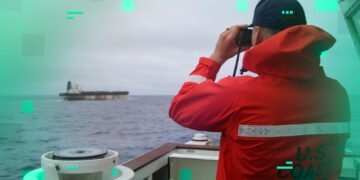























U.S. Military Seizes Oil Tanker Marinera in Atlantic Pursuit
A U.S. military operation has successfully seized the oil tanker Marinera off the coast of Iceland after a weeks-long effort to track the vessel, which was previously known as Bella 1. The operation highlights ongoing tensions surrounding U.S. sanctions against vessels linked to oil trade with sanctioned nations, particularly Iran and Venezuela.
Why It Matters
The seizure of the Marinera underscores the increasing complexities of global oil trade amid geopolitical sanctions. With reports emerging that the vessel had attempted to mislead tracking systems and change its flag to evade detection, this incident raises questions about international maritime law and the enforcement of sanctions against nations like Iran and Venezuela.
Key Developments
- On January 7, U.S. military forces captured the Marinera following an extensive tracking operation across the Atlantic.
- The Royal Air Force and Royal Navy provided crucial support, including aerial refueling through the RFA Tideforce.
- Prior to its seizure, the Marinera engaged in what is referred to as "spoofing," projecting false signals to disguise its true location.
- The tanker had a problematic registration, reportedly flying the Guyanese flag despite not being properly registered there.
- Following changes in its name and flag, at least 21 other sanctioned tankers also adopted Russian flags in recent weeks.
Full Report
The Vessel’s Journey
Tracking data revealed that on September 3, the Marinera, then known as Bella 1, was at Kharg Island, Iran’s main oil export hub. Using satellite imagery, analysts confirmed the tanker had been transmitting a false signal to obscure its location—a tactic known as spoofing. The ship’s genuine signal was restored after it left Iranian waters, and it began its journey on November 13. It was later tracked to the Suez South anchorage in Egypt, a key transit point for oil and gas.
On December 3, the tanker traveled through the Strait of Gibraltar, and by December 17, it was last confirmed in the Caribbean near Antigua and Barbuda. Reports from December 20 indicated that the U.S. Coast Guard had attempted to board the vessel, asserting they possessed a seizure warrant due to the tanker not flying a valid national flag.
Seizure Operation
On January 1, the Marinera reemerged in the North Atlantic under its new name and flag, having changed from Guyanese to Russian. Analysts pointed out that at least six vessels in recent weeks had shifted to Russian flags, an unusual spike in maritime activity related to sanctioned oil trade.
Just hours before the U.S. seizure, the Marinera made several distress calls, likely to alert other vessels in the vicinity. At approximately 1:43 p.m., the U.S. European Command announced the capture of the tanker for sanction violations. Military experts noted that helicopters used in the operation had limited range, indicating possible cooperation with the Icelandic government or support from a naval platform.
Russia’s Response
Russia has responded to the seizure, stating it violated maritime law as established under the 1982 UN Convention on the Law of the Sea. The Russian transport ministry maintained that the tanker had been granted a temporary right to fly its flag and demanded adherence to the principles of freedom of navigation.
Context & Previous Events
This incident is not isolated; it follows a series of alerts involving the U.S. seizure of several tankers linked to Venezuela. In December, for instance, the U.S. had previously captured vessels such as the Skipper and Centuries for similar violations. The data-driven analysis by international shipping agencies illustrates a worrying trend in how sanctioned ships maneuver through complex maritime landscapes to continue operations despite international barriers. This case further emphasizes ongoing scrutiny over maritime activities involving sanctioned states, as geopolitical tensions continue to evolve in the oil sector.