






















A Nigerian Court Grants Bail to Former Attorney General Abubakar Malami Amid Money Laundering Charges
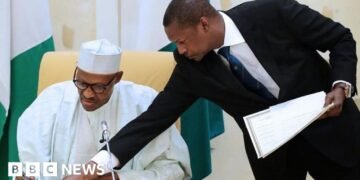
A Nigerian court has granted bail to former Attorney General Abubakar Malami, along with his wife and son, who are facing significant money laundering charges. This development is notable given Malami’s previous prominence in the government of former President Muhammadu Buhari, raising questions about corruption within the ranks of Nigeria’s political elite.
Why It Matters
The charges against Malami reflect broader concerns about accountability and corruption within Nigeria’s political framework. His arrest and the subsequent proceedings symbolize a potentially pivotal moment in the fight against corruption, as they suggest that even high-ranking officials may no longer be shielded from legal repercussions.
Key Developments
- A court in Nigeria has granted bail to Abubakar Malami and his family, setting the bail at 500 million naira (approximately $350,000) each.
- The former attorney general faces 16 counts of money laundering and abuse of office, totaling 8.7 billion naira (around $6 million).
- Malami, who had been detained since December 30, maintains his innocence and claims the charges are politically motivated.
- He recently left the ruling All Progressives Congress (APC) to join the opposition African Democratic Congress.
- The Economic and Financial Crimes Commission (EFCC) is investigating several properties allegedly linked to Malami across Nigeria.
Full Report
Court Proceedings and Bail Conditions
Presiding Judge Emeka Nwite acknowledged that the charges against Malami and his family are bailable offenses, allowing them to be released under specific conditions. In addition to the bail amount, they are required to provide two guarantors with property ownership in designated areas of Abuja and must surrender their travel documents to the court.
Charges and Allegations
The EFCC has leveled serious accusations against Malami, alleging that he misappropriated government funds during his tenure, which he then allegedly used to acquire various properties in major Nigerian cities, including the capital. The discussion surrounding the extensive list of these properties has sparked a nationwide debate about the wealth amassed by Nigeria’s political figures.
Political Implications and Reactions
Political analysts suggest that this case could signify a shift in the political landscape. Idris Adamu, a political analyst, expressed surprise at Malami’s arrest, contrasting it with his former power as a prominent minister. The high-profile nature of the prosecution serves as a reminder that no individual, irrespective of their stature or past influence, is above the law.
Context & Previous Events
Malami, who was instrumental in the administration of President Muhammadu Buhari from 2015 to 2023, was arrested following a series of corruption allegations that have plagued several ministers from the previous government. His departure from the APC to the opposition party highlights changing political allegiances as Nigeria prepares for the upcoming 2027 general elections. The case against Malami is scheduled to resume on February 17, 2025, showcasing the ongoing scrutiny of Nigeria’s political elite in the context of corruption and accountability.